- Free Consultation 24/7: (813) 222-2220 Tap Here To Call Us


Drug Sentences Slashed in Cocaine Cases


Federal Drug Defense Strategy: Navigating Cocaine Mandatory Minimums in Tampa
How Do You Contact a Federal Criminal Defense Attorney in Tampa for a Cocaine Case?
If you or a loved one is facing federal crack or powder cocaine charges in the Middle District of Florida, securing an aggressive defense is your most critical priority. You can immediately speak to federal criminal defense attorney W.F. Casey Ebsary by calling our local Tampa office directly at 813-222-2220. We encourage you to review our professional background on our Attorney Bio Page to understand our decades of trial experience. To schedule a completely confidential evaluation of your pending indictment, please visit our secure Contact Page right away.
Federal Statutory Weight and Penalty Matrix
| Offense Type | Pre-2010 Statutory Weight (100:1 Disparity) | Post-Fair Sentencing Act Weight (18:1 Disparity) | Mandatory Minimum Prison Term |
| Crack Cocaine (Level 1) | 5 Grams or more | 28 Grams or more | 5 Years Minimum |
| Crack Cocaine (Level 2) | 50 Grams or more | 280 Grams or more | 10 Years Minimum |
| Powder Cocaine (Level 1) | 500 Grams or more | 500 Grams or more | 5 Years Minimum |
| Powder Cocaine (Level 2) | 5 Kilograms or more | 5 Kilograms or more | 10 Years Minimum |
What is the Fair Sentencing Act of 2010?
The Fair Sentencing Act of 2010 is a federal statute enacted by the United States Congress to correct severe inequities in drug crime penalties. Before this legislation took effect, federal drug laws imposed a highly criticized 100-to-1 weight ratio between powder cocaine and crack cocaine offenses. The new statutory framework dramatically reduced this disparity down to an 18-to-1 ratio and entirely eliminated the mandatory minimum penalty for simple possession. You can review the official statutory text and ongoing legislative annotations directly on Justia US Code.
How Does the Supreme Court Ruling in Dorsey v. United States Protect Defendants?
The United States Supreme Court issued a major ruling in Dorsey v. United States that resolved how changes to federal statutory penalties apply to pending cases. The high court explicitly held that the more lenient mandatory minimum provisions of the Fair Sentencing Act apply to offenders who committed a crime before the law was signed but were sentenced after it took effect. This binding precedent ensures that individuals are protected by the revised, lower mandatory minimum laws rather than obsolete, harsher rules. The full judicial opinion and archival dockets can be researched directly through the official United States Supreme Court Website.
What Did the Supreme Court Conclude About the Interim Guidelines Window?
The Supreme Court in Dorsey also addressed the specific legal status of defendants caught in the interim operational window of the new law. The Court held that the new Act’s lower statutory minimums apply to individuals who committed an offense prior to the effective date and were sentenced before the updated Federal Sentencing Guidelines officially took effect. This critical decision covered the transitional gap between August 3, 2010, and November 1, 2010, preventing an unfair disparity in penalties. By doing so, the ruling created a uniform standard that guaranteed all post-enactment sentencing proceedings benefited from the legislative reforms.
What Are the Specific Weight Thresholds for Federal Crack Cocaine Mandatory Minimums Today?
Under modified federal drug trafficking laws, a five-year mandatory minimum prison sentence is triggered when an offense involves 28 grams or more of a substance containing crack cocaine. To trigger the severe ten-year mandatory minimum prison sentence, the prosecution must establish that the offense involved at least 280 grams of crack cocaine. These modern thresholds represent an enormous structural shift away from the old limits, which stood at a mere 5 grams and 50 grams. Our defense practice meticulously reviews all police seizure weights to ensure that the government has not artificially inflated the narcotics quantities.

Federal powder cocaine statutory mandatory minimums remain distinct from crack cocaine metrics, requiring substantially higher physical weights to activate identical sentences. A five-year mandatory minimum prison sentence requires an offense involving 500 grams or more of a mixture containing a detectable amount of powder cocaine. The ten-year mandatory minimum penalty applies only when the underlying criminal charge involves five kilograms or more of the substance. This distinct differentiation highlights the ongoing statutory weight boundaries established by Congress under Title 21 of the United States Code.
What is Section 404 of the First Step Act of 2018?
Section 404 of the First Step Act represents a massive legislative expansion of federal drug sentencing reform by granting retroactive relief. White the Dorsey decision only shielded individuals sentenced after 2010, the First Step Act allowed individuals sentenced under the old 100-to-1 regime to petition for immediate reductions. Eligible federal inmates can request that judges apply the modern, lower statutory minimums to their historical convictions. Detailed information regarding these retroactive relief statistics is routinely published by the United States Sentencing Commission.
How Do Federal Judges Determine a Final Sentence in a Cocaine Case?
Federal judges calculate criminal sentences by conducting a multi-step analysis during a formal sentencing hearing. The court first computes an advisory range based on the official guidelines grid, balancing the drug weight against the defendant’s prior criminal history score. The judge must then ensure the final sentence complies with any overriding statutory mandatory minimums established by Congress. Finally, the court evaluates personal mitigation factors to decide if a downward variance below the recommended guidelines is legally appropriate.
What is the Role of the United States Sentencing Commission?
The United States Sentencing Commission is an independent agency housed entirely within the federal judicial branch. This agency is tasked with establishing comprehensive sentencing policies and issuing the official Federal Sentencing Guidelines manual. When Congress passes new statutory laws like the Fair Sentencing Act, the Commission updates the guideline point values to reflect those updates. You can access extensive educational reports, amendment archives, and legal research tools on the official United States Sentencing Commission Website.
What is the Primary Difference Between a Statutory Minimum and a Sentencing Guideline?
A statutory mandatory minimum is a fixed, mandatory prison term established directly by Congress that a federal judge cannot normally go below. In contrast, the Federal Sentencing Guidelines provide a recommended sentencing range calculated based on the offense characteristics and the defendant’s prior record. While judges retain broad discretion to deviate above or below the recommended guideline ranges, they are strictly bound by the statutory minimums unless an explicit exception applies. Effective defense work focuses on neutralizing statutory minimum thresholds while simultaneously driving down the guideline point calculations.
What is the Safety Valve Exception in Federal Drug Defense?
The federal safety valve exception is a highly valuable statutory tool that allows a judge to bypass a harsh mandatory minimum prison sentence. To qualify for safety valve relief under federal law, a defendant must satisfy five specific criteria, including having minimal criminal history points and zero weapons involvement. The statute also requires the defendant to participate in a truthful disclosure session with federal prosecutors prior to the final sentencing date. Our firm carefully prepares clients for this delicate process to maximize their chances of avoiding mandatory prison terms.
How Can Prior Convictions Escalate Federal Cocaine Mandatory Minimums?
A defendant’s prior criminal record can trigger severe statutory sentencing enhancements under federal narcotics laws. If a defendant has a past conviction for a serious drug felony or a serious violent felony, the statutory mandatory minimum can double. To execute these severe enhancements, the United States Attorney’s Office must file a formal written notice under 21 U.S.C. Section 851. We rigorously audit every past state and federal conviction to challenge whether those entries meet the strict statutory definitions required for an enhancement.
Where Do Federal Cocaine Cases Take Place in the Tampa Bay Area?
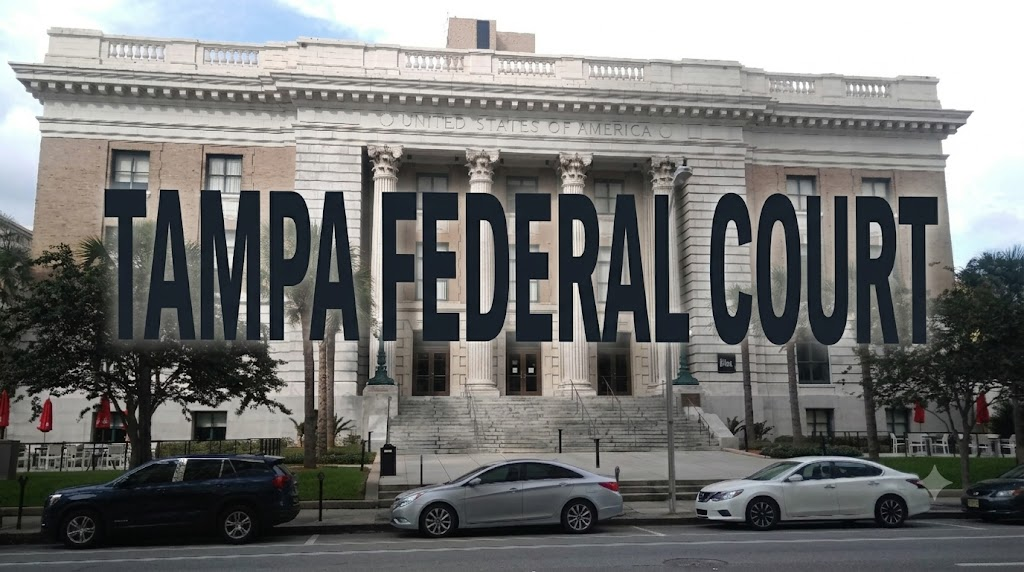
Federal criminal cases originating in Hillsborough, Pinellas, or surrounding counties are prosecuted inside the United States District Court for the Middle District of Florida. Court proceedings, including trials and sentencing hearings, are held at the Sam M. Gibbons United States Courthouse in downtown Tampa. You can access local court schedules, administrative orders, and filing protocols by visiting the Middle District of Florida Courthouse Website. Having an established local attorney who regularly practices before the Tampa division judges provides a critical defensive advantage.
What is a Federal Drug Conspiracy Charge Under 21 U.S.C. Section 846?
A federal drug conspiracy charge does not require proof that an individual was caught with physical narcotics in their possession. Instead, prosecutors must prove beyond a reasonable doubt that an agreement existed between multiple individuals to violate federal drug laws. Under federal conspiracy doctrines, a defendant can be held legally accountable for the entire drug weight distributed by the broader organization. Defending against these broad, sweeping conspiracy indictments demands an aggressive and deeply analytical legal strategy.
How Do Defense Attorneys Challenge the Government’s Drug Weight Calculations?
Challenging the exact weight of the seized controlled substances is a primary battlefield in federal narcotics defense. Federal law includes the weight of any carrier mediums, adulterants, or diluents when calculating the total statutory threshold. Our legal team cross-examines forensic chemists, audits laboratory testing equipment, and reviews chain-of-custody logs for structural errors. Forcing the government to substantiate every single gram can successfully lower a client’s mandatory minimum exposure.
Why is the General Federal Saving Statute Important in Criminal Cases?
The general federal saving statute dictates that the amendment or repeal of a criminal law does not automatically extinguish past legal liabilities. Historically, this meant that individuals who broke an old law were forced to face those severe terms even if Congress later softened the penalties. The Dorsey decision successfully carved out an exception by proving that Congress intended the Fair Sentencing Act to override this default rule for newer sentencings. Understanding how this saving rule interacts with modern criminal justice reform is vital when structuring any retroactive litigation strategy.
Can an Older Federal Crack Cocaine Sentence Be Reduced Retroactively?
Yes, individuals currently serving sentences imposed under the obsolete 100-to-1 crack cocaine laws can still seek retroactive adjustments. These retroactive applications are filed directly with the original sentencing court utilizing the modern frameworks set by the First Step Act. The presiding federal district judge retains the discretion to reduce the term of imprisonment after evaluating current guidelines and inmate safety. Our Tampa law office conducts detailed eligibility audits to assist families in pursuing these vital sentence modifications.
What Role Do Federal Presentence Investigation Reports Play in Sentencing?
A Presentence Investigation Report is a comprehensive document prepared by a federal probation officer prior to your sentencing date. This critical report details your personal history, financial status, complete criminal record, and the officer’s personal calculation of the sentencing guidelines. Because federal judges rely heavily on this document, any uncorrected factual or legal error can cause a significantly longer prison sentence. Our defense team carefully reviews every page of this report to submit formal, written legal objections before it reaches the judge.
How Can You Secure an Immediate Strategic Case Evaluation with drug2go.com?
When navigating the federal judicial system, delay is the enemy of a successful outcome. Our local Tampa legal team stands ready to step into the gap and protect your future from severe mandatory sentences. Call our central office directly at 813-222-2220 to establish immediate contact with an experienced practitioner. You may also outline your situation securely through our digital platform by visiting the drug2go.com Contact Portal right now.

Original Discussion from 2014

Federal Criminal Defense Attorney Lawyer for cocaine cases notes new United States Supreme Court case law on Mandatory minimum sentencing for Drug offenses under the Fair Sentencing Act’s more lenient mandatory minimum provisions.
The Court ruled today that the favorable provisions apply to offenders who committed crack cocaine crime before effective date of Act, but were sentenced after Act took effect .
The Court also held the new Act’s lower minimums also apply to those who committed an offense prior to effective date of Act and were sentenced after the new Act’s effective date, before new Guidelines took effect.
Fighting for you or a friend. Law Office of W.F. ”Casey” Ebsary Jr 2102 W Cleveland St Tampa, Florida 33606 (813) 222-2220


We Accept the Following Credit Cards:


